
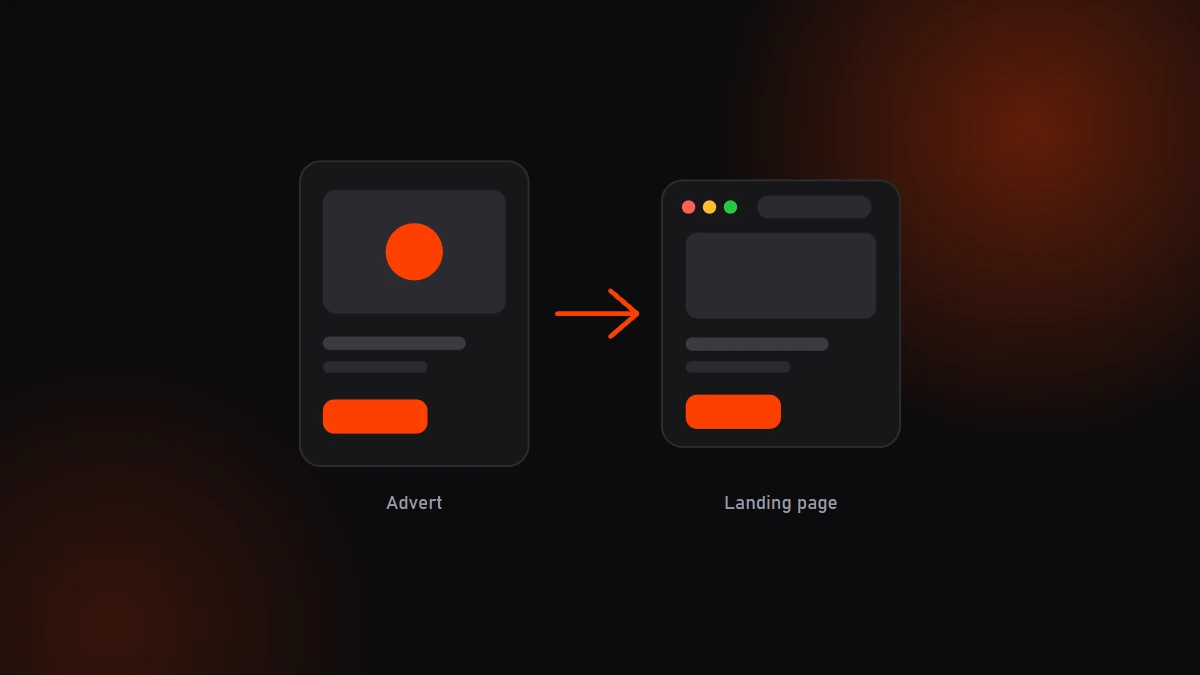
A campaign can bring people to your website, but the website decides what happens next. When the two are planned separately, visitors meet a message that changes between the advert and the page, tracking that was never connected and a next step that is hard to find. Planning them together fixes most of these problems before they cost money. Here is how to do it.
Begin with a single shared goal
Write one goal that both the campaign and the website serve, for example more qualified enquiries for a particular service. Every decision, from the advert wording to the page layout, can then be checked against it.
If the campaign aims at awareness while the website is built to take bookings, the two will pull in different directions. Agree the priority first.

Keep the message consistent from advert to page
People click because of a specific promise. The page they reach should confirm it quickly, in the same language, before asking for anything. A mismatch makes visitors doubt they are in the right place.
- Repeat the main benefit from the advert in the page headline
- Show the same offer, name and visual style
- Explain the next step in one clear sentence
- Remove links that distract from the main action
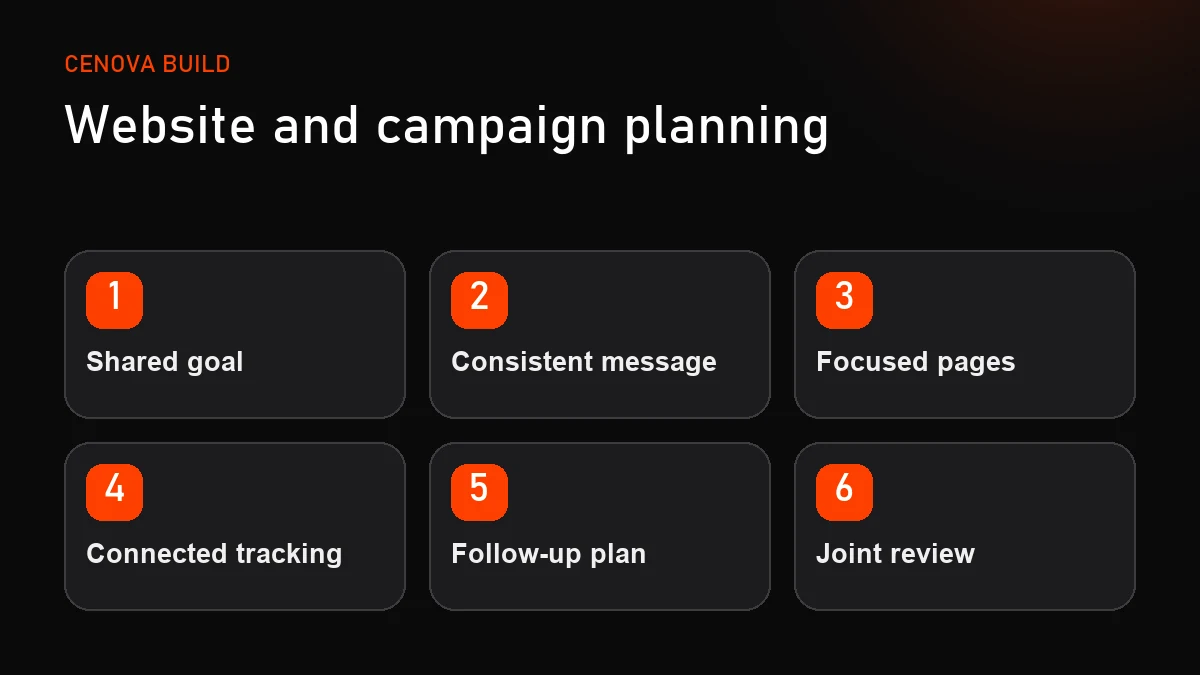
Build pages for campaigns, not just for the site
A general home page serves many audiences. A campaign page serves one. Give each major offer its own focused page with a single call to action, supporting detail and answers to likely questions.
These pages can also support search visibility over time if they are useful and linked from the main site, so plan them as part of the website, not as throwaways.
Connect tracking before launch
Decide which actions count as success and set them up across the site and the advertising platforms together. Test that a form submission or call tap is recorded once and appears in each tool you rely on.
Use consistent naming for campaigns so reports from different platforms can be compared. Tidy tracking is much harder to fix after launch.
Prepare the follow-up
A campaign succeeds when enquiries are handled well. Decide who replies, how fast and with what information. Make sure the confirmation message a visitor sees, and the email they receive, continue the same tone.
Consider what happens for people who are not ready yet: a useful guide, a reminder or a clear way to return later.
Review the whole journey together
When results disappoint, look at the full path: advert, click, page, form and response. Often a small page improvement, such as a clearer headline or a shorter form, helps more than changing the advert.
Hold one regular review that includes both marketing and website decisions, so changes happen together and their effect is easier to understand.
Who needs to be involved
Joint planning works best when the people who write adverts, build pages and handle enquiries share one conversation. Even a short planning call before launch can reveal mismatches that would otherwise appear as wasted spend.
If different vendors handle marketing and the website, agree who owns tracking, who approves changes to landing pages and how results will be shared.
A simple example
A business promotes a new service with search and social adverts. Instead of linking to the home page, it builds one focused page with the advert headline, a short explanation, three common questions answered and a short enquiry form, with tracking tested before launch. This is an illustrative example, not a client result.
When enquiries arrive, the team can see which advert and which page produced them, and they know exactly what to adjust first.
Common mistakes to avoid
Launching adverts before the page is ready is the most common. Others include changing the page and the advert at the same time, which hides what made the difference, and forgetting mobile visitors, who often make up most of the traffic.
Keep changes small and deliberate, note what you changed and when, and judge results over a sensible period rather than a day.
Our performance marketing team plans campaigns and the pages behind them together, so the message, tracking and next step line up.
Related reading: What to Check Before Launching Google Ads or Meta Ads · Choose Marketing Metrics That Support Decisions
Frequently asked questions
Why should website and campaign planning be done together?
Because visitors experience them as one journey. Aligned messages, pages and tracking reduce wasted clicks and make results easier to understand.
Do I need a separate landing page for each campaign?
Usually it is better. A focused page that repeats the advert’s promise and offers one clear action tends to work better than a general page.
What should I track for a campaign?
Track the actions that show real interest, such as form submissions, calls or purchases, and test that they are recorded correctly before launch.
How can I tell whether the advert or the page is the problem?
Compare click-through on the advert with how many visitors take action on the page. Low clicks suggest the advert; plenty of clicks but few actions suggest the page or the offer.
How often should I review campaign and website results?
Weekly for active campaigns at first, then monthly. Review the whole journey together so you can decide what to change.
