
Paid campaigns spend money from the first click, so the quiet work before launch matters. Most avoidable waste comes from the same few gaps: an unclear offer, a landing page that does not match the advert, tracking that was never tested, and enquiries that nobody answers quickly. This checklist covers what to confirm before you switch Google Ads or Meta Ads on.
Be clear about the offer and the audience
Write down what you are promoting, who it is for and what you want them to do next. A campaign for a specific service, with one clear action, is easier to judge than a general brand message.
Decide what a good enquiry looks like. If you can describe a qualified lead in one sentence, you can set up forms, targeting and reporting to match.

Match the landing page to the advert
The page people reach should repeat the promise made in the advert, in the same words where possible. It should explain the offer, show how to respond, and load comfortably on a mobile phone.
- The headline matches the advert message
- The main call to action is visible without scrolling
- The form asks only for what you genuinely need
- The page works on small screens and slower connections
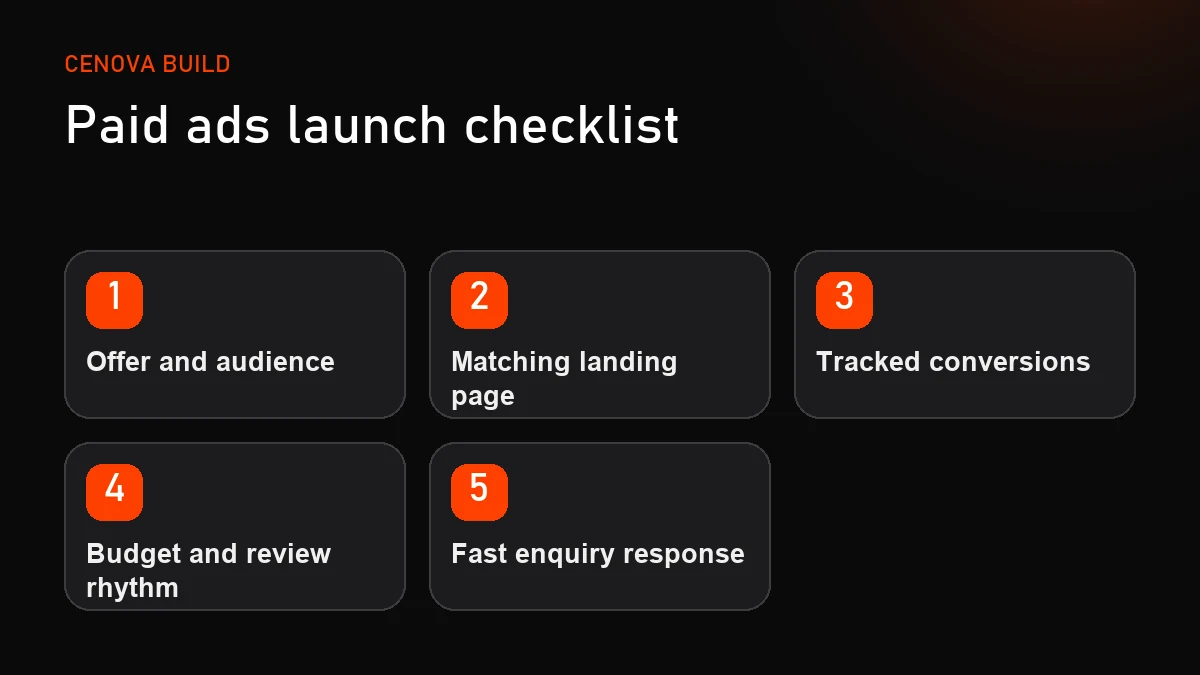
Set up conversion tracking and test it
Define the actions that count: a submitted enquiry, a call tap, a purchase. Then place the tracking, submit a test and confirm the event appears in each platform. Both Google Ads and Meta Ads work best when they receive reliable conversion data.
Also check that your consent and privacy wording matches the tools you use. If a tag is added later, the policy should be updated at the same time.
Choose a budget and a review rhythm
Pick a daily or monthly budget you are comfortable spending while the platform learns, and agree how long you will wait before changing anything. Judging a campaign after a day or two usually leads to unnecessary edits.
Plan a regular review, for example weekly at first. Look at cost per enquiry, enquiry quality and which adverts attract the right people, rather than only clicks.
Creative and messaging checks
Look at the advert as a stranger would. Does it say what you offer, for whom, and what to do next within a few seconds? Clear, specific wording usually beats clever wording, especially in a crowded feed or results page.
Prepare more than one version of the message so you can learn what resonates. Change one thing at a time, such as the headline or the image, so you can tell what made the difference. Keep every claim accurate and easy to support, because platform policies and customers both reward honesty.
Prepare for the response, not just the click
Paid traffic only pays off if enquiries are handled well. Decide who answers, how quickly, and what is said. Save common replies so the first response is helpful and consistent.
Finally, confirm your advert accounts, payment methods and permissions belong to the business, not to an individual or a vendor you might change later.
Common launch mistakes
Sending all traffic to the home page instead of a page built for the offer is one of the most common. Visitors then have to search for what the advert promised.
Another is optimising for the wrong action. If the platform is told that any page view is a conversion, it will find cheap clicks rather than useful enquiries. Choose the action that reflects real interest, and review whether the leads that arrive are the ones you wanted.
Our performance marketing team can review your offer, landing page and tracking before you launch, so the first budget goes further.
Related reading: Choose Marketing Metrics That Support Decisions · Connect Your Website and Campaign Planning
Frequently asked questions
What should I check before launching Google Ads?
Confirm the offer, the landing page match, conversion tracking, billing and account ownership, budget limits and a plan to respond quickly to enquiries.
How much should I spend on my first campaign?
It depends on your market and goals. Choose a budget you can sustain long enough for the platform to gather data, and agree a review date before spending.
Is Meta Ads or Google Ads better for a small business?
Google Ads tends to reach people already searching for a service, while Meta Ads helps you reach people by interest and audience. The right mix depends on your offer and how customers find you.
How do I know if my ads are working?
Compare cost per qualified enquiry or sale with what the work is worth to you. Clicks and impressions alone do not show business results.
How long before I should change a campaign?
Allow enough time and enough results to see a pattern, often a week or more depending on volume. Frequent changes can reset learning and hide what actually worked.
Do I need a landing page, or can I send ads to my home page?
A dedicated landing page is usually better because it repeats the advert’s promise and offers one clear next step. A home page asks visitors to find that path themselves.
