

Most website and app disputes start long before launch, with a scope that was never fully written down. One side assumed a feature was included; the other priced something smaller. Agreeing the essentials up front takes a few hours and saves weeks of friction later. Here is what to settle before any design or development begins.
Write down the goal and the audience
Start with why the project exists and who it serves. A clear sentence about the goal gives both sides a way to judge every later request: does this help the goal, or is it an extra?
Describe the main user journeys too, for example finding a service and enquiring, or signing in and completing a task. They shape the pages, screens and features far more than a feature list.

Define what is included, and what is not
List the deliverables in plain terms: number of pages or screens, features, integrations, devices and browsers supported. Equally important, list what is out of scope, such as copywriting, photography, migration of old content or ongoing maintenance.
A short exclusions list is one of the best protections for both sides. It turns vague expectations into decisions you can discuss early.
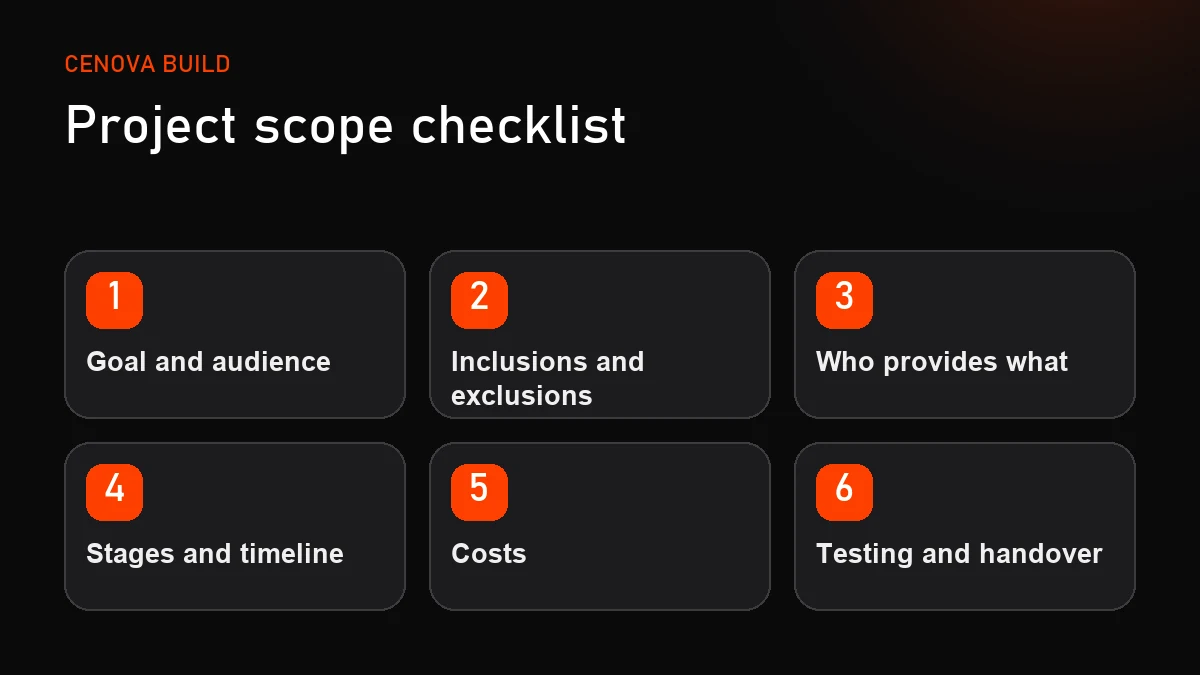
Agree who provides what
Projects stall when content, logins or approvals are missing. Decide who writes the text, supplies images and brand files, owns domain and hosting accounts, and signs off each stage.
- Content: who writes it, by when, and who approves it
- Access: hosting, domain, analytics and third-party accounts
- Approvals: named decision makers and review deadlines
- Assets: logos, photos, fonts and brand guidelines
An example of a scope gap
Suppose a business asks for a website with a contact form. Nothing is said about where enquiries go, who answers, or whether a confirmation email is required. The developer builds a basic form; the business expected automatic replies and a record in a spreadsheet. This is an illustrative example, not a client project.
Neither side was careless. The scope simply stopped at the form. Writing the full journey, from submission to response, would have exposed the gap during planning.
Set the timeline and the review stages
Break the work into stages with a review after each: structure, design, build, testing and launch. Each review is a chance to catch misunderstandings while they are cheap to fix.
Agree how long reviews take on your side. A timeline assumes feedback arrives promptly, so a slow approval can shift the final date even when development is on track.
Be explicit about costs
Separate the build fee from recurring or third-party costs: hosting, domains, premium plugins, app-store fees, software subscriptions and advertising. A fee for one part of the project should not be assumed to cover everything.
Agree how extra requests will be handled. A simple rule, such as written change requests with an updated price, keeps conversations calm.
Plan testing and handover
Decide how the work will be tested and accepted: devices checked, forms and payments verified, accessibility basics reviewed, key journeys walked through.
Then agree what you receive at the end: access to accounts, source files where applicable, short documentation and a plan for updates and support. A good handover lets you run the product with confidence.
Warning signs of a weak scope
Be cautious if a proposal uses vague phrases such as unlimited revisions, full functionality or standard features without defining them. Ambiguity usually becomes a disagreement once real work starts.
Also watch for a proposal that lists a price but no deliverables or review stages. You should be able to read it and know what will exist at each stage, how you will approve it and what happens if requirements change.
If you are planning an app or a larger website, our app development team can help you turn these points into a scope you can compare and approve.
Related reading: How to Brief a Website Project: A Practical Checklist · How to Choose the Best App Development Agency in India
Frequently asked questions
What should be in a website or app project scope?
The goal, audience, deliverables, exclusions, responsibilities, timeline with review stages, costs, testing approach and handover details.
Why is an exclusions list important?
It makes unstated assumptions visible, so both sides can agree what is not included and avoid disagreements about extras later.
Who should own the domain and hosting accounts?
Usually the business itself. Owning these accounts keeps control of your website even if you change developers.
How do I handle changes after the project starts?
Use written change requests that describe the new work and any effect on cost and timeline, and approve them before work begins.
What should I receive at handover?
Access to all relevant accounts, any agreed source files, brief documentation, and clear information about maintenance and support.
Is a written agreement necessary for small projects?
Yes. Even a short written scope and price protects both sides. The detail can be brief, but the goal, deliverables, responsibilities and costs should be recorded.
