
A good website brief does not need technical language. It needs clear answers to a few business questions: who the site is for, what visitors should do, which pages and features are required, and how the finished work will be checked. With those answers on paper, you can compare proposals on the same basis and avoid paying for assumptions.
Start with one business outcome
Write a single sentence describing the job of the website. For example: help a prospective customer understand a service and send an enquiry with the details your team needs to reply. This is an illustrative brief, not a claim about a client project.
A site can support several outcomes, but agreeing the priority makes every later decision easier. If each page has a different main action, the navigation, copy, design and measurement plan all become harder to judge.

Describe your audience and their questions
List the two or three groups of people you most want to reach, and the questions each group asks before contacting a business like yours. Real questions from enquiries, calls and messages are more useful than guesses.
These questions become the backbone of your page structure. A service page that answers them directly usually does more work than one that only lists features.
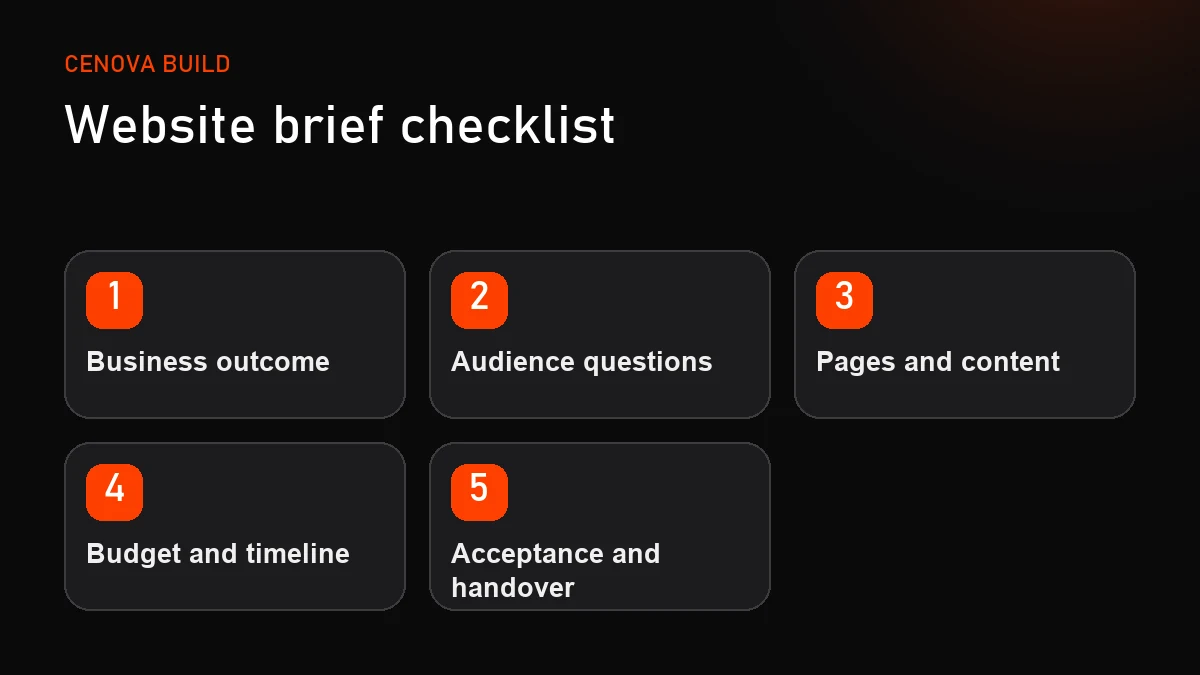
List the pages, content and features you expect
Sketch a simple sitemap: home, services, about, contact and any pages that support a specific offer. Note who will write the text, supply photos and approve each page, because content is the most common cause of delays.
- Pages you need at launch, and pages that can wait
- Features such as enquiry forms, booking, a blog or an online store
- Integrations with email, payment, analytics or customer systems
- Anything that must stay the same, such as existing URLs or branding
Set a realistic budget and timeline
Share a budget range or at least a ceiling. It lets a developer recommend an approach that fits instead of quoting something you cannot use. Separate the build fee from domain, hosting, premium plugins and advertising costs so that totals are comparable.
For timing, mention fixed dates such as a launch event, and be honest about how quickly your team can review drafts. Delays in feedback usually move a schedule more than development does.
Common mistakes that weaken a brief
The most frequent problem is describing a solution instead of a need. Asking for a slider, a pop-up or a particular colour tells a developer what to build, but not why. Describe the visitor problem first and let the design respond to it.
Another is leaving out the people who will approve the work. If a partner or manager sees the site for the first time at launch, expect late changes. Name each decision maker in the brief and agree when they will review.
Finally, avoid copying a competitor’s site as the brief. Their pages reflect their own audience and goals. Use competitors as a reference for what customers expect, then explain how your business is different.
Agree how the work will be accepted
Decide in advance how you will judge the finished site. Practical checks include responsive layouts on common screen sizes, working forms, readable text, sensible page titles and descriptions, and a basic review of loading speed.
Also record what happens after launch: who holds the logins, who can edit content, and whether maintenance is included or priced separately.
What to do with the brief once it is written
Send the same brief to every developer you speak to, and ask each to explain their approach in their own words. Compare how well they understood your goal, not only the price. A proposal that asks sensible follow-up questions is usually a better sign than one that simply agrees with everything.
Keep the brief as a living reference during the project. When a new idea appears, check it against the original outcome. If it serves the goal, add it deliberately; if not, note it for a later phase.
If you would like help turning these answers into a clear scope, our website design and development team can review your notes and suggest next steps.
Related reading: Give Your Website a Clear Search Foundation · What to Agree Before Building a Website or App
Frequently asked questions
What should a website brief include?
At minimum: your business goal, target audience, the pages and features you expect, content responsibilities, budget range, timeline, and how the finished site will be accepted and handed over.
How long should a website brief be?
One to two pages is usually enough. Clarity matters more than length. A short brief with specific answers is better than a long document full of general statements.
Do I need to know which platform to use before writing a brief?
No. Describe what the site must do and who will manage it. A good developer will recommend a platform such as WordPress based on those needs.
What is the difference between a brief and a scope of work?
The brief states your needs and goals. The scope of work is the agreed response: the specific pages, features, deliverables, costs and timeline the developer will provide.
Can I change the brief after the project starts?
Yes, but changes should be written down and priced where they add work. Agreeing a simple change process at the start keeps projects fair for both sides.
Who should write the website brief?
The business owner or the person who understands customers best should lead, ideally with input from anyone who will approve or maintain the site. A developer can help you refine it, but the goals must come from you.
