

Posting more often does not automatically build an audience. What works is a clear reason behind each post, a rhythm your team can actually sustain, and a simple way to learn from what people respond to. A content plan is the tool that holds those pieces together. This guide explains how to build one that stays useful beyond the first month.
Start with the purpose of your social presence
Decide what social media is for in your business. It might help new customers discover you, answer common questions, show how you work or keep past customers engaged. One or two clear purposes keep the plan focused.
Be honest about the audience, too. Write down who you want to reach and which questions or problems bring them to your kind of business. Those questions are your best source of post ideas.
Choose channels you can maintain
Pick the platforms where your audience already spends time and where you can produce good work regularly. Two channels done well beat five done occasionally.
Consider the format each channel favours. Short video, image carousels, written posts and stories each need different skills and time. Match the format to your resources before committing.
Build around a few content themes
Themes make planning easier and help followers know what to expect. Choose three to five that connect your expertise to audience needs.
- Education: explain a common problem or process in simple terms
- Proof: show real work, with permission, and what you learned
- Behind the scenes: how your team plans, builds and decides
- Offers and updates: services, availability and clear next steps
Create a calendar your team can keep
A calendar turns ideas into a routine. Plan posts by week or month, note the theme, format and goal for each, and leave space for timely topics. A realistic rhythm, for example a few posts a week, is better than an ambitious schedule that collapses.
Batch the work where possible. Writing and designing several posts together saves time and keeps the voice consistent.
Common content planning mistakes
Many businesses plan around what they want to say instead of what the audience wants to know. Reverse it: start with customer questions and show how your work answers them.
Others copy the formats of larger brands without the budget to sustain them. Choose formats that suit your time and skills, and improve quality before increasing quantity.
Finally, avoid treating every post as an advert. A healthy mix of useful, human and promotional content keeps followers interested and gives your offers more weight when you do share them.
Set up simple approvals
Agree who writes, who reviews and who publishes. A short approval path prevents delays and protects accuracy, especially for claims, prices and anything involving other people.
Keep a shared place for drafts, final copy and image files so nothing is lost when someone is away.
Review and refine every month
Look at which posts attracted useful responses: saves, replies, enquiries, visits to your website. Notice patterns in themes, formats and timing rather than judging single posts.
Use what you learn to adjust the next month. Keep what works, retire what does not and test one new idea at a time.
A simple example
A small design studio might choose three themes: practical tips, finished project walkthroughs and team insights. Each week it publishes one tip, one project story and one short behind-the-scenes post, reviewed by one person before publishing. This is an illustrative example, not a client result.
After a month it checks which format brought the most profile visits and enquiries, then shifts its calendar slightly toward that format. The plan stays small, but it improves.
Using social content to support your website
Social posts work best when they lead somewhere useful. Link to a relevant service page or guide, and make sure the destination continues the message the post started.
Check that your profile links, bio and pinned posts all point to the pages you most want visitors to see, and update them when offers change.
If you would like a plan that fits your team and your goals, our social media marketing team can help with strategy, content and publishing support.
Related reading: Turn Brand Strategy into Everyday Communication · Connect Your Website and Campaign Planning
Frequently asked questions
How often should a small business post on social media?
Choose a frequency you can keep up consistently, often a few posts a week to start. Quality and consistency matter more than volume.
What should I include in a social media content plan?
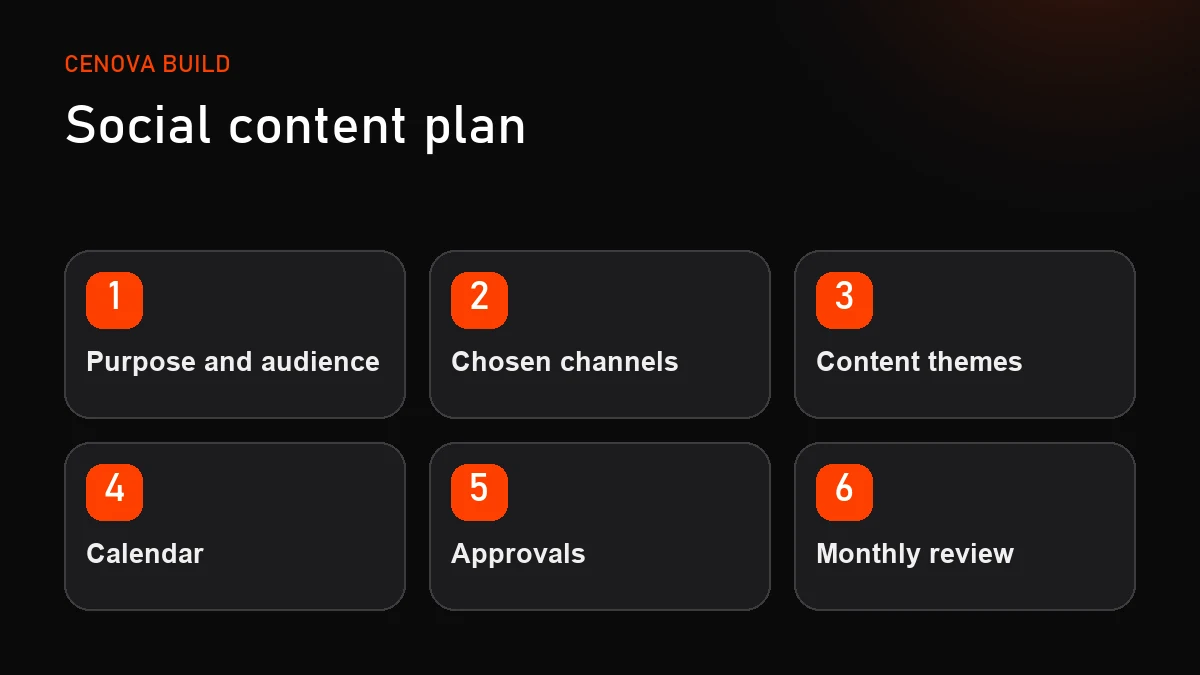
Your purpose, audience, chosen channels, content themes, a posting calendar, an approval process and a monthly review of what worked.
How many social media platforms should I use?
Start with the one or two where your audience is most active and where you can produce good content regularly. Add more only when you can maintain them.
How do I come up with content ideas?
Use the real questions customers ask, common problems you solve, stories from your work and updates about your services, then group them into themes.
How do I know if my social media is working?
Look at meaningful signals such as replies, saves, website visits and enquiries rather than follower counts alone, and compare them month to month.
Should every post promote my services?
No. Mix helpful, behind-the-scenes and promotional posts. Useful content builds trust, which makes your offers more credible when you share them.
