
A brand strategy only matters if it shows up in everyday work: the website headline, the social caption, the proposal, the way you answer an enquiry. Many businesses have a strategy document that sits in a folder while communication drifts. The goal is to turn the big ideas into a few simple habits your team can follow. Here is how to do that.
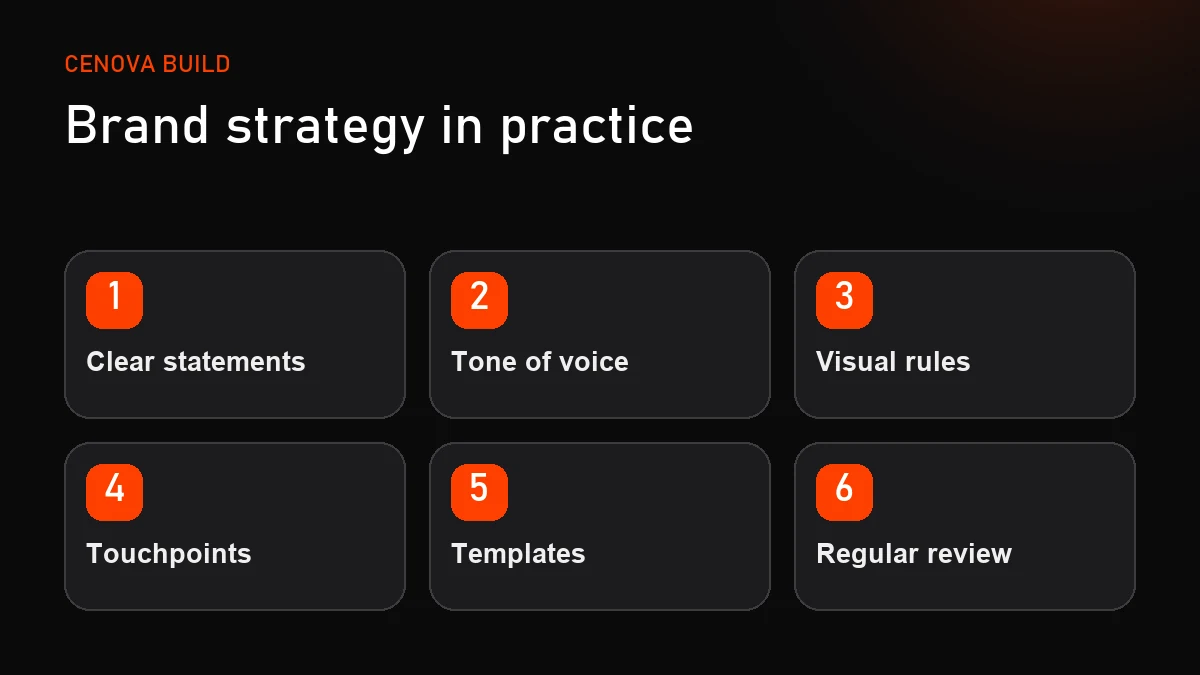
Reduce the strategy to a few clear statements
Summarise your direction in plain words: who you serve, what you help them achieve, what makes your approach different and how you want to sound. If it takes a page of jargon to explain, it will not be used.
Test each statement with a simple question: would a team member know what to do differently because of it? If not, make it more specific.

Define your tone of voice in practical terms
Tone is easier to follow when it is concrete. Instead of saying friendly and professional, give examples: use plain words, explain terms, avoid hype, answer the question directly.
- Words and phrases we use, and ones we avoid
- How formal or relaxed our writing is
- How we handle questions, delays and mistakes
- Examples of a good headline, caption and reply
Set simple visual rules
Visual consistency does not require a large guideline book. Record your logo use, main colours, fonts, image style and spacing in one short page, with a few correct and incorrect examples.
Store the files where everyone can find them. Most inconsistency comes from people using whatever version they can find fastest.
Common mistakes when applying a brand
The first is treating the brand as a design exercise only. A new logo and colour palette do not help if the message stays vague. Clarify what you say before polishing how it looks.
The second is writing for yourself instead of the customer. Internal terms, product names and industry jargon can be meaningless to the people you want to reach. Test your wording on someone outside the business.
The third is inconsistency between the promise and the experience. If your brand says responsive and clear but enquiries wait days for a reply, customers believe the experience.
Apply the message across touchpoints
List where customers meet your business: website, social profiles, advertisements, email signatures, proposals and invoices. Check each one against your key statements and tone.
Start with the places people see first, usually the website home page and your main social profiles, then work outward.
Create templates and shared examples
Templates make consistency easy. A standard structure for service descriptions, social posts, proposals and email replies saves time and keeps the message steady.
Collect a small library of strong examples, such as a well-written service page or a great customer reply, so new team members can see what good looks like.
Review regularly
Every few months, look at a sample of recent communication and ask whether it still sounds like you. Update your statements when the business changes, but avoid changing them for the sake of novelty.
Consistency builds recognition over time, so adjust gradually and keep the core message steady.
Who owns the brand day to day
Name one person who is responsible for keeping the message and visuals consistent. They do not have to approve everything, but they should maintain the guide, answer questions and review key pieces before publishing.
Share the guide with anyone who writes or designs on your behalf, including freelancers and agencies. A short briefing at the start avoids many rounds of correction later.
A simple example
A small consultancy decides its direction is practical advice for growing businesses, in plain language without jargon. It rewrites its home page headline, adds a short tone checklist for social posts and creates a template for proposals. This is an illustrative example, not a client result.
Within a few weeks, its website, posts and proposals read as one voice, and new team members know how to write for the brand.
If your communication feels inconsistent, our brand strategy team can help you define the message and put it to work across your website, content and campaigns.
Related reading: Build a Brand Message People Can Understand · Build a Social Content Plan with a Clear Purpose
Frequently asked questions
What is brand strategy in simple terms?
It is a clear decision about who you serve, what you offer, how you are different and how you communicate, so your message stays consistent.
How do I keep my brand consistent across channels?
Write down a short message and tone guide, set simple visual rules, use templates and review a sample of your communication regularly.
Do small businesses need a brand guideline?
A short one is useful. A single page covering message, tone, logo, colours and fonts is enough to keep communication consistent.
How long does it take to build a consistent brand?
You can set the foundations in weeks, but recognition builds over months of steady, consistent communication.
What is the difference between brand strategy and a logo?
A logo is a visual element. Brand strategy is the thinking behind it: the positioning, message and personality that every visual and written piece should reflect.
Who should be responsible for brand consistency?
One named person, such as the owner or marketing lead, should maintain the guide, answer questions and review important materials, while everyone follows the shared rules.
